How to Plan a Residential Gutter Installation
When a home needs new gutters, the process involves more than attaching metal troughs along the roofline. Proper gutter installation requires careful planning around water flow, material choices, and the specific weather patterns of your area. For homeowners in Atlanta, where heavy rain and occasional storms are common, getting the details right from the start can prevent expensive repairs later.
This article walks through the main considerations for a residential gutter system: how to evaluate your current setup, what materials and configurations work best, and what to expect during a professional installation. The goal is to help you make informed decisions before work begins. gutter installation service
Assessing Your Current Gutter System
Before planning new gutters, look at what is already in place. Signs of trouble include peeling paint on the fascia boards, water stains on siding, erosion in the flower beds directly below the roofline, or standing water in the yard after a rain. These often point to gutters that are undersized, clogged, or pitched incorrectly.
Check the slope of existing gutters. Gutters should slope gently toward downspouts, typically about a quarter-inch of drop for every ten feet of run. If water pools in the middle of a section, the pitch is off. Also examine downspout placement. A system with too few downspouts can overflow during a heavy downpour, while too many can look cluttered and increase maintenance.
Take note of the gutter material. Older homes may have sectional gutters that join at seams. These seams are common leak points. Seamless gutters, formed from a continuous piece of metal, reduce that risk. If your current system is sectional and showing its age, replacement with a seamless option is worth considering.
Choosing Gutter Materials
The most common residential gutter materials are aluminum, steel, copper, and vinyl. Each has trade-offs in cost, durability, and appearance.
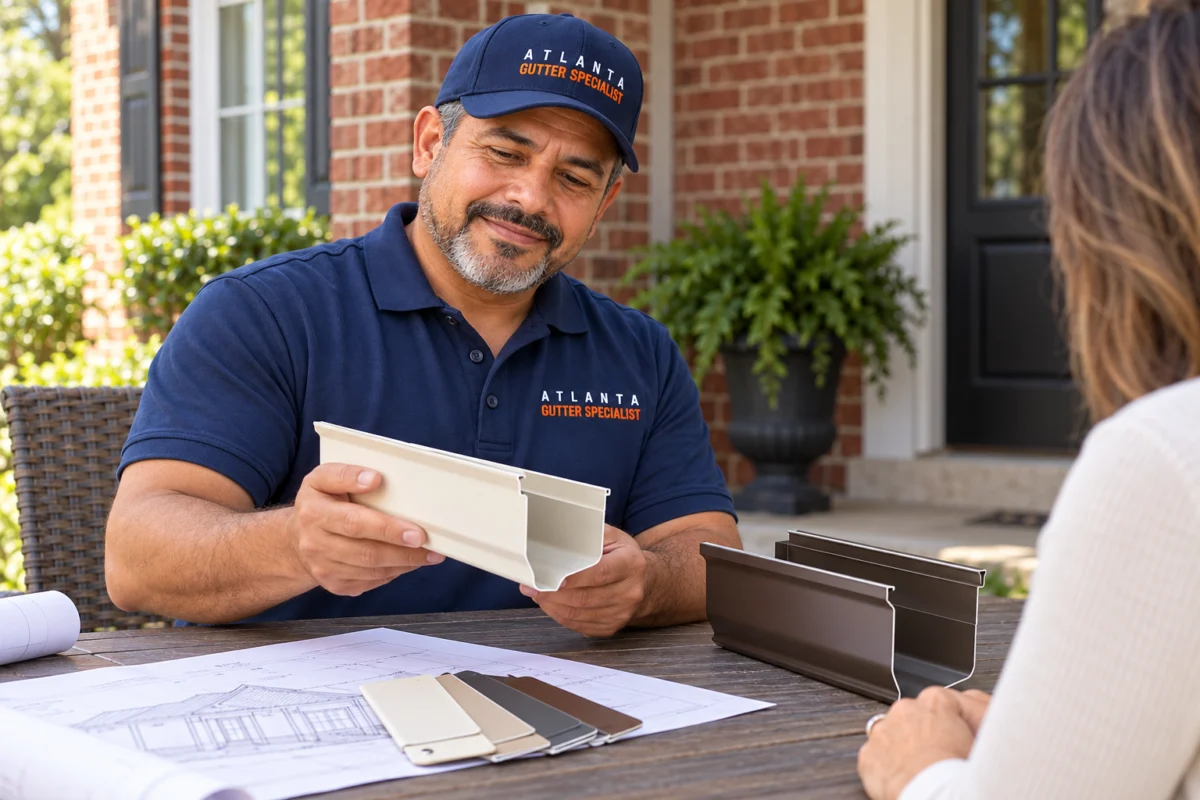
Aluminum gutters are lightweight and resist rust well. They can be painted to match trim. Steel gutters, usually galvanized or coated, are stronger but can rust if the coating scratches. Copper gutters develop a natural patina over time and last for decades, but they are expensive and require skilled installation. Vinyl gutters are inexpensive and easy to install but become brittle in extreme cold and fade in direct sun.
For Atlanta’s humid climate, rust resistance matters. Aluminum or galvanized steel with a quality finish are practical choices. Copper is an option for homeowners who want a distinctive look and plan to stay in the home long-term.
Understanding Gutter Profiles and Sizing
Gutters come in two main shapes: K-style and half-round. K-style gutters have a flat back and a decorative front that resembles crown molding. They hold more water than half-round gutters of the same width and are the standard choice for most modern homes. Half-round gutters have a smooth, semicircular shape and are often used on historic or craftsman-style houses.
Size matters. A standard five-inch K-style gutter works for most roofs, but a roof with a large surface area or a steep pitch may need six-inch gutters to handle the volume. In Atlanta, where sudden downpours are common, upsizing can help prevent overflow. A professional installer can calculate the required size based on roof area and local rainfall intensity.
Water Routing and Downspout Placement
Gutters are only part of the system. Water must be directed away from the foundation. Downspouts should connect to underground drains or extend several feet from the house through splash blocks or flexible tubing. Never let downspouts empty directly next to the foundation, as that can lead to basement seepage or slab settlement.
Plan downspout locations to match the landscape. Avoid placing them where water will pool against the house or flow toward a neighbor’s property. In some Atlanta neighborhoods with clay soil, proper drainage is especially critical because clay expands when wet and can push against foundation walls.
Consider adding gutter guards or leaf screens if the home is near trees. They reduce cleaning frequency and help prevent clogs during the fall.
Replacement Considerations
If the existing gutters are more than 20 years old, replacement may be more cost-effective than repairs. Multiple leaks, sagging sections, and rust spots are clear indicators. Replacement also gives you a chance to upgrade to a better material or configuration.

When replacing, the old gutters and downspouts are removed down to the fascia. The fascia should be inspected for rot or damage before new gutters go up. Any repairs to the fascia should be made at this stage. A proper gutter installation service includes this inspection step, ensuring the new system has a solid mounting surface.
Also consider whether to add or relocate downspouts during replacement. If you have noticed water pooling in certain areas, this is the time to adjust the routing. The cost of moving a downspout during installation is much less than doing it later as a separate job.
Installation Methods: Seamless vs. Sectional
Seamless gutters are formed on-site from a continuous coil of metal. They have no joints along the run, so they are less likely to leak at the seams. Sectional gutters come in pre-cut lengths that are joined with connectors. They are easier to install but have more potential leak points.
Seamless gutters are the preferred choice for most professional installations. They also look cleaner because there are no visible seam lines. However, they require specialized equipment to form, so not every contractor offers them. When you contact a gutter installation service, ask whether they use seamless or sectional methods and which they recommend for your home.
Working with a Professional
A residential gutter installation is not a simple weekend project for most homeowners. It involves working at height, handling metal or vinyl safely, and getting the slope just right. Hiring a professional ensures the work meets building codes and performs as expected.
When vetting contractors, ask for proof of insurance and references. A reputable company will provide both. Also ask about their experience with homes similar to yours in age and style. In Atlanta, a contractor familiar with local building practices and weather patterns can offer advice tailored to your situation.
Get at least three estimates before deciding. Compare not just the price but the scope of work. Some quotes may include downspout extensions, gutter guards, or fascia repairs while others treat those as extras. Make sure you understand what is included.
Timing the Work
Gutter installation can be done year-round, but spring and fall are popular times because the weather is mild. In Atlanta, summer heat and humidity can make roof work uncomfortable, and winter can bring cold snaps that affect material handling. Plan ahead if you have a tight timeline. Good contractors book weeks in advance during peak seasons.
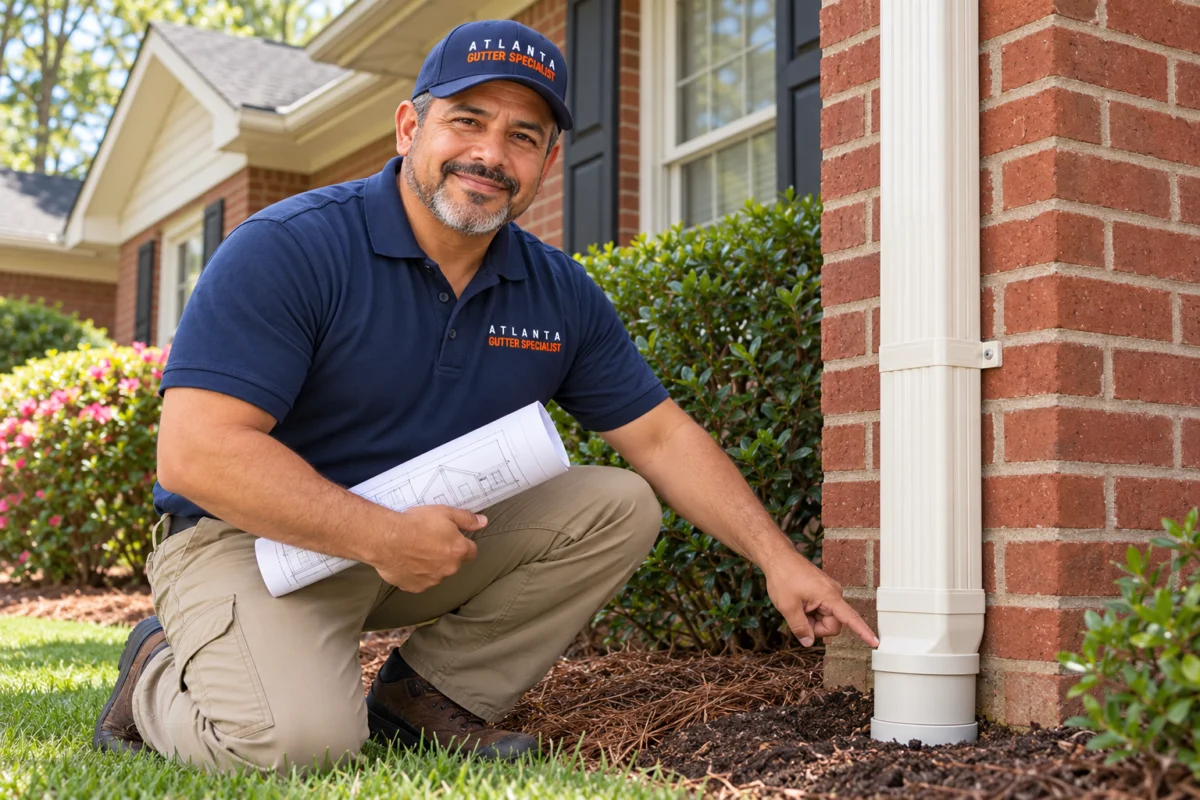
If you are replacing gutters as part of a larger exterior project, coordinate the timing. New gutters should go up after roofing work is complete but before painting or siding work, so the fascia can be checked and repaired under the gutters.
Final Checks After Installation
Once the new gutters are up, test them with a garden hose. Run water at the highest point of each section and confirm it flows to the downspout without pooling. Check that downspouts carry water away from the foundation. Also look for any gaps at the corners or ends where debris could enter.
A good installation should last 20 years or more with basic maintenance. Clean gutters at least twice a year, more often if trees overhang the roof. Check for loose hangers or fasteners after storms. With proper care, the system will protect the home for decades.
Taking the time to plan a gutter installation carefully pays off in fewer repairs and better performance. Understanding the choices in materials, sizing, and routing helps you work effectively with a contractor and get a result that suits your home and climate.